



produced by
MUSLIMCONVERTS.COM
How a New Muslim Prayers
The DHUHR (Early Afternoon), Asr (late afternoon ) and Isha ( night ) prayer
The Dhuhr prayer is the second prayer of the day.
It starts when the sun begins to decline from its zenith and ends when the
size of an object's shadow is equal to the objects size.
The Asr prayer is the third prayer of the day.
It starts when an object's shadow is equal to the objects size and ends when just before sunset.
It is better to prayer Asr before the sky becomes yellow (even
though it is allowed to pray at such a time) because the Prophet ( peace be
upon him) disliked Muslims praying at such as time and. He remarked that the
Munafiq (Hypocrite ) offers his pray at this time.
The Isha prayer is the fifth prayer of the day.
It starts when twilight has disappeared and ends before midnight
All three of these prayers consist of 4 units each and what is recited in these prayers is exactly the same.
The only difference which occurs is that the first two units (raka'ts) in the Isha Prayer are recited AUDIBLY. But the final two units (raka'ts) are recited silently
However in the Dhuhr and Asr prayer all the units (Raka'ts) are Recited silently in ones
heart/mind. Just before Prayer Establish the Sutrah by placing anything (about the height of a saddle) just beyond the
place were you will prostrate so that people walk outside that
object. This could be anything from your bag to even a chair
Your eyes should be looking at
the place on the ground were you will prostrate your
forehead later on in the prayer Place left hand on your chest. Then
place your right hand on the top of the back
of your left hand as in the picture "Subhaan-Allaah wal-hamdu Lillaah wa laa
ilaaha ill-Allaah wa Allaah-hoo akbar wa laa hawla wa la quwwata
illa Billaah "
Note: when you reach
intermediate level recite Surah Fathiha
in this
position (described at bottom of
guide) In the bowing position say the following
three times "Subhana rab-bi yal adheem" ("Glory be to my Lord who is the very
greatest" ) "Rabbanaa wa lak al-hamd" In this prostration say the following 3
times "Subhana rubbiyal
a'ala" ( "How perfect is my Lord, the Most High" )
Next, saying Whilst in the prostration say again the following "Subhana rubbiyal a'ala" (
say 3 times) ( "How perfect is my Lord, the Most High") Start of Second Rakah Place left hand on your chest. Then place your
right hand on the top of the back of your left
hand as in the picture "Subhaan-Allaah wal-hamdu Lillaah wa laa
ilaaha ill-Allaah wa Allaah-hoo akbar wa laa hawla wa la quwwata
illa Billaah "
Note: when you reach
intermediate level recite Surah Fathiha
in this
position (described at bottom of
guide) In the bowing position say the following
three times "Subhana rab-bi yal adheem" ("Glory be to my Lord who is the very
greatest" ) In this prostration say the following 3
times "Subhana rubbiyal
a'ala" ( "How perfect is my Lord, the Most High" )
Next, saying Whilst in the prostration say again the following "Subhana rubbiyal a'ala" (
say 3 times) ( "How perfect is my Lord, the Most High") Then Recite This concludes the Second Rakah
Next, get up for the third rakah, supporting yourself off the ground.
You can also clench your fist, meaning, supporting yourself with your hands when getting off the ground End of Second Rakah
or you may raise the hands whilst still sitting and at the end of position 2.10 and then get up for the third rakah thus missing out position 3.1 and going straight to position 3.2
(Note this is only done after the second rakaah of a three or 4 Rakah prayer. ) Place left hand on your chest. Then place your
right hand on the top of the back of your left
hand as in the picture "Subhaan-Allaah wal-hamdu Lillaah wa laa
ilaaha ill-Allaah wa Allaah-hoo akbar wa laa hawla wa la quwwata
illa Billaah "
Note: when you reach
intermediate level recite Surah Fathiha
in this
position (described at bottom of
guide) In the bowing position say the following
three times "Subhana rab-bi yal adheem" ("Glory be to my Lord who is the very
greatest" ) "Rabbanaa wa lak al-hamd" In this prostration say the following 3
times "Subhana rubbiyal
a'ala" ( "How perfect is my Lord, the Most High" )
Next, saying Whilst in the prostration say again the following "Subhana rubbiyal a'ala" (
say 3 times) ( "How perfect is my Lord, the Most High") Start of Fourth Rakah Place left hand on your chest. Then place your
right hand on the top of the back of your left
hand as in the picture "Subhaan-Allaah wal-hamdu Lillaah wa laa
ilaaha ill-Allaah wa Allaah-hoo akbar wa laa hawla wa la quwwata
illa Billaah "
Note: when you reach
intermediate level recite Surah Fathiha
in this
position (described at bottom of
guide) In the bowing position say the following
three times "Subhana rab-bi yal adheem" ("Glory be to my Lord who is the very
greatest" ) Whilst in the prostration say again the following "Subhana rubbiyal a'ala" (
say 3 times) ( "How perfect is my Lord, the Most High" Next, saying Whilst in the prostration say again the following "Subhana rubbiyal a'ala" (
say 3 times) ( "How perfect is my Lord, the Most High") Then Recite Having said the above mentioned prayers, turning the face to
the right. This following prayer is recited: "Assalamu alaikum wa rahmatullah " (Peace and mercy of Allah be on you). Then turning the face to the left, the prayer above is said
again: "Assalamu alaikum wa rahmatullah " (Peace and mercy of Allah be on you).
You may print out this for personal use only. Do not copy, alter or change it. You
are welcome to link to this page on your site
Before prayer one must perform Ablution
How to perform Ablution (Wudhu)
Wear Proper clothing
START OF A 4 RAKAH PRAYER (ie Dhuhr, Asr or Isha prayer Prayer)
1.1
Establish the Sutrah by placing anything (about the height of a saddle) just beyond the place were you will prostrate so that people walk outside that object. This could be anything from your
bag to even a chair.
 Then Stand facing the Kabah in Makka in Saudi Arabia
(Qibla).
Then Stand facing the Kabah in Makka in Saudi Arabia
(Qibla).
Make intention as to which prayer you
are about to perform (e.g. Dhuhr or Asr or Maghrib prayer).
Note!
Intention should be in mind not verbal.That is one should be thinking of which prayer one is about to
perform.

Saying
"Allah-hoo Akbar"
(Allah is Great)
Raise both
your hands to height that is level with shoulders or level with
top of the ears as in the picture
1.4
Whilst in this position say
the following Dua (supplication):
(Glory be to Allaah, praise
be to Allaah, there is no god except Allaah,
Allaah is Most great and there is no power and no
strength except with Allaah)
1.5
After completing the recitation
pause for a moment,
then saying
"Allah-hoo Akbar"
(Allah is Great)
raise both your hands and go down to raku. Position below
 Ruku
Ruku
1.7
Next, straighten up the back from
the ruku saying:
Sami Allaahu liman hamidah,
( Allah hears the one who praises Him )
and raise both your hands (with palms of hands facing
Kabah ) with fingers apart (not spaced out) level with shoulders
or level with top of the ears .
And straighten your back
1.8
In the standing position you
should be erect so that the joints of your body go back in
place. Whilst in this standing position say the following
1.9
Then Saying
"Allah-hoo Akbar"
(Allah is Great),
separate hands from the side
and
go down for sajdah (prostration) in picture below
1.10
Sajdah
1.11
Next, raise the head from
prostration while saying
"Allah-hoo Akbar"
("Allah is Great")
Then assume the sitting position
While sitting between the two sajdahs, place your left foot
along the ground and sit on it, and keep the right foot upright,
with the point of the toes towards the qiblah or You can also practice
iq’aa (resting on both heels, and all the toes).
You should also be relaxed such that every bone is in its proper
position. Whilst in this position one should say:
"'Rabb ighfir lee "
("O my Lord, forgive me " )
Note. the hands should be close to the knees and fingers spread
out. one should look at the site were one will prostrate.
1.12
"Allah-hoo Akbar"
(Allah is Great)
Prostrate for the second time.
1.13
Next, raise the head from prostration whilst saying
"Allah-hoo Akbar"
("Allah is Great")
Then assume the sitting position.
This concludes the First Rakah
From
this position stand up straight for the secound Rakah
End of First Rakah
2.1
Whilst in this position say
the following Dua (supplication):
(Glory be to Allaah, praise
be to Allaah, there is no god except Allaah,
Allaah is Most great and there is no power and no
strength except with Allaah)
2.2
After completing the recitation
pause for a moment, then saying
"Allah-hoo Akbar"
(Allah is Great)
raise both your hands (with palms of hands facing Kabah
) with fingers apart (not spaced out) level with shoulders or
level with top of the ears go down to raku. Position below
2.3
Ruku
2.4
Next, straighten up the back from
the ruku saying:
Sami Allaahu liman hamidah,
( Allah hears the one who praises Him )
and raise both your hands (with palms of hands facing Kabah )
with fingers apart (not spaced out) level with shoulders or
level with top of the ears .
And straighten your back
2.5
In the standing position you
should be erect so that the joints of your body go back in
place. Whilst in this standing position say the following
"Rabbanaa wa lak al-hamd"
(Our Lord, [and] to you be all Praise)
2.6
Then Saying
"Allahu Akbar"
(Allah is Great),
separate hands from the side and go down for sajdah in picture
below
2.7
2.8
Next, raise the head from prostration while saying
"Allah-hoo Akbar"
("Allah is Great")
Then assume the sitting position
While sitting between the two sajdahs, place your left foot
along the ground and sit on it, and keep the right foot upright,
with the point of the toes towards the qiblah or You can also practice
iq’aa (resting on both heels, and all the toes).
You should also be relaxed such that every bone is in its
proper position.
Whilst in this position one should say::
"Rabb ighfir lee "
("O my Lord, forgive me " )
Note. the hands should be close to the knees and fingers
spread out. one should look at the site were one will prostrate.
2.9
Sajdah
"Allah-hoo Akbar"
(Allah is Great)
Prostrate for the second time.
2.10
Next, raise the head from prostration while saying
"Allah-hoo Akbar"
("Allah is Great")
Then assume the sitting position
While sitting place your left foot
along the ground and sit on it, and keep the right foot upright,
with the point of the toes towards the qiblah or You can also practice
iq’aa (resting on both heels, and all the toes).
You should also be relaxed such that every bone is in its
proper position.
Place right palm on right thigh/knee and left palm on the left
thigh/knee, and place the end of the right elbow on the right
thigh. Spread left palm on left knee, clench all fingers of the
right hand, point the finger adjacent (index finger) to the
thumb towards qiblah, and fix sight on it.
Also when pointing with the RIGHT HAND INDEX FINGER, u can
place the thumb on the middle finger
Or you can make a circle with the two fingers Move the
RIGHT HAND INDEX FINGER as you supplicate with it from the
start till the end of the Tashahud
(Glory be to Allaah, praise be to Allaah, there is no god
except Allaah, Allaah is Most great and there is no power and no
strength except with Allaah)
Start of Third Rakah
As soon as get up after completing the
second rakaah
raise both your hands (with palms of hands facing Kabah ) with
fingers apart (not spaced out) level with shoulders or level
with top of the ears.
3.2
Whilst in this position say
the following Dua (supplication):
(Glory be to Allaah, praise
be to Allaah, there is no god except Allaah,
Allaah is Most great and there is no power and no
strength except with Allaah)
3.3
After completing the recitation
pause for a moment,
then saying
"Allah-hoo Akbar"
(Allah is Great)
raise both your hands (with palms of hands facing Kabah
) with fingers apart (not spaced out) level with shoulders or
level with top of the ears go down to raku. Position below
Ruku
3.5
Next, straighten up the back from
the ruku saying:
Sami Allaahu liman hamidah,
( Allah hears the one who praises Him )
and raise both your hands (with palms of hands facing
Kabah ) with fingers apart (not spaced out) level with shoulders
or level with top of the ears .
And straighten your back
3.6
In the standing position you
should be erect so that the joints of your body go back in
place. Whilst in this standing position say the following
3.7
Then Saying
"Allah-hoo Akbar"
(Allah is Great),
separate hands from the side
and
go down for sajdah in picture below
3.8
Sajdah
3.9
Next, raise the head from
prostration while saying
"Allahu Akbar"
("Allah is Great")
Then assume the sitting position
While sitting between the two sajdahs, place your left foot
along the ground and sit on it, and keep the right foot upright,
with the point of the toes towards the qiblah or You can also practice
iq’aa (resting on both heels, and all the toes).
You should also be relaxed such that every bone is in its proper
position. Whilst in this position one should say:
"'Rabb ighfir lee "
("O my Lord, forgive me " )
Note. the hands should be close to the knees and fingers spread
out. one should look at the site were one will prostrate.
3.10
"Allah-hoo Akbar"
(Allah is Great)
Prostrate for the second time.
3.11
Next, raise the head from prostration while saying
"Allah-hoo Akbar"
("Allah is Great")
Then assume the sitting position.
While sitting place your left foot along the ground and sit on
it, and keep the right foot upright, with the point of the toes
towards the qiblah
or You can also practice iq’aa (resting on both heels, and
all the toes). You should also be relaxed such that every bone
is in its proper position.
This concludes the third Rakah
Next, get up for the Fourth rakah, supporting yourself off the
ground. You can also clench your fist, meaning, supporting
yourself with your hands when getting off the ground
End of Third Rakah
4.1
Whilst in this position say
the following Dua (supplication):
(Glory be to Allaah, praise
be to Allaah, there is no god except Allaah,
Allaah is Most great and there is no power and no
strength except with Allaah)
4.2
After completing the recitation
pause for a moment, then saying
"Allah-hoo Akbar"
(Allah is Great)
raise both your hands (with palms of hands facing Kabah
) with fingers apart (not spaced out) level with shoulders or
level with top of the ears go down to raku. Position below
4.3
Ruku
4.4
Next, straighten up the back from
the ruku saying:
Sami Allaahu liman hamidah,
( Allah hears the one who praises Him )
and raise both your hands (with palms of hands facing Kabah )
with fingers apart (not spaced out) level with shoulders or
level with top of the ears .
And straighten your back
4.5
In the standing position you
should be erect so that the joints of your body go back in
place. Whilst in this standing position say the following
"Rabbanaa wa lak al-hamd"
(Our Lord, [and] to you be all Praise)
4.6
Then Saying
"Allah-hoo Akbar"
(Allah is Great),
separate hands from the side and go down for sajdah
(prostration) in picture
below
4.7
4.8
Next, raise the head from prostration while saying
"Allah-hoo Akbar"
("Allah is Great")
Then assume the sitting position
While sitting between the two sajdahs, place your left foot
along the ground and sit on it, and keep the right foot upright,
with the point of the toes towards the qiblah or You can also practice
iq’aa (resting on both heels, and all the toes).
You should also be relaxed such that every bone is in its
proper position.
Whilst in this position one should say::
"Rabb ighfir lee "
("O my Lord, forgive me " )
Note. the hands should be close to the knees and fingers
spread out. one should look at the site were one will prostrate.
4.9
Sajdah
"Allah-hoo Akbar"
(Allah is Great)
Prostrate for the second time.
4.10
Next, raise the head from prostration while saying
"Allah-hoo Akbar"
("Allah is Great")
Then assume the sitting position
Your Left buttocks should be on the floor. Your left leg should
be bent. Outside of Left Femur should also be on the floor and
your inside of your Left Tibia and foot should be protruding
underneath the front of your Right Tibia (shin area).
Also the right foot can be placed upright with the toes
pointing towards the qiblah or it can be placed on the ground.
In this position, you will be leaning heavily on the left hand
(but make sure that your left hand is placed on your thigh/knee
and not the floor).
Place right palm on right thigh/knee and left palm on the left
thigh/knee, and place the end of the right elbow on the right
thigh. Spread left palm on left knee, clench all fingers of the
right hand, point the finger adjacent (index finger) to the
thumb towards qiblah, and fix sight on it.
Also when pointing with the RIGHT HAND INDEX FINGER, u can
place the thumb on the middle finger
Or you can make a circle with the two fingers Move the
RIGHT HAND INDEX FINGER as you supplicate with it from the
start till the end of the Tashahud
(Glory be to Allaah, praise be to Allaah, there is no god
except Allaah, Allaah is Most great and there is no power and no
strength except with Allaah)
(end of Tashahud.)
4.11
4.12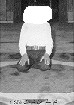
This completes a prayer consisting of 4 rakahs such as Dhuhr, Asr
and Isha prayers
Copyright @ 2017 AbuUbaida's websites All rights reserved