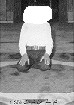
The Fajr (Morning) prayer
This is the first prayer and it consists of 2 units (raka'ts).
Essentially what is said in all the 5 obligatory prayers is the
same. The only difference is the number of units (raka'ts) performed in
each prayer, how long each unit is and whether the first 2 units (raka'ts) of a prayer are said Audible or silently in ones heart
Thus the FAJR (morning) Prayer consists of 2 units (raka'ts), the
DHUHR (Early Afternoon) Prayer and ASR (late afternoon ) prayer and
ISHA ( night ) prayer all 4 consist units
(raka'ts) and finally the MAGHRIB (sunset) prayer consists of 3 units
(raka'ts).
The other difference is that the First 2 rakaats of FAJR, MAGHRIB
and ISHA prayers are recited loudly and the remaining
rakaats of these prayers are recited silently. However all 4 rakaats of DHUHR
and ASR are recited silently
For a New Muslim or any Muslim who does not know how to prayer you just need
to memorize the following few words.
And this will enable you to pray all the 5 daily prayers.
| A) Allahu Akbar |
 |
| B) Subhaan-Allaah wal-hamdu Lillaah wa laa ilaaha
ill-Allaah wa Allaahu akbar wa laa hawla wa la quwwata illa Billaah |
|
| C) Sami Allaahu liman
hamidah |
 |
D) Rabbana wa lakaal hamd |
 |
| E Assalamu alaikum wa rahmatullah |
 |
If you are up to it you can also memorize the
following |
|
| F) Subhana rab-bi yal atheem |
 |
|
G) Subhana rubbiyal a'ala |
 |
| H) Rabbi eghfir lee |
|
Once you have memorized these words and you have gone through these
prayer guides I have prepared you will be surprised that the Prayer is not
as difficult as it looks.
I suggest you print this out and practice holding the pages reciting what
is there to be recited in their respective body positions.
Going through the motions repeatedly will help you learn quickly. Also
look at the video and the flash movie as it will help you see the postures
and movements. May Allah make it easy for you.
Once you have learnt
the above and are praying confidently.. Try to learn Surah
Fatiha
Surah Fatiha should be recited one verse at a time
Video to
teach Fatiha
Listen to the whole of Surah
Fatiha
1. In the Name of Allah, the Most Beneficent, the Most Merciful.
2. All the praises and thanks be to Allah, the Lord of the 'Alamin
(mankind, jinns and all that exists).
3. The Most Beneficent, the Most Merciful.
4. The Only Owner (and the Only Ruling Judge) of the Day of
Recompense ( i.e. the Day of Resurrection)
5. You (Alone) we worship, and You (Alone) we ask for help (for
each and everything).
6. Guide us to the Straight Way
7. The Way of those on whom You have bestowed Your Grace, not (the
way) of those who earned Your Anger (such as the Jews), nor of those
who went astray (such as the Christians).
Note-
Males garments/pants should be above the ankles
(unlike in the picture. InshaAllah better diagrams will be made as soon as
possible).
Women's garment should be a forearms lower than her
skins (measure your arm length , from elbow to longest finger, if this is
say is 45 cm, ) then form your skins and ) thus her feet will
be completely covered.
Women are NOT supposed to pray when they
are menstruating and experiencing post-childbirth
bleeding.
Abstaining from prayers for a women experiencing
post-childbirth bleeding is a maximum of forty (40) days. If
her bleeding stops before the 40 days she must make ghusl
and start praying. Also at the end of her
menstruation she must make ghusl and begin her prayers.
|
|
Before prayer one must perform
Ablution
How to perform Ablution (Wudhu)
Just before Prayer
Establishing
the Sutrah (A Tall Object About The Height Of A Saddle,
Just Beyond the Place of Prostration, Within Which Nothing
Should Pass)
Place
anything (about the height of a saddle) just beyond the
place of prostration. Things that can be used are: a wall, bed, tall pillow, tall
purse, tall stick, tree, etc. Anything that breaks the
path between the person praying and someone who
"may" need to pass in front. It's
best to pray facing a wall, bed, or any other type of tall
object, so that there will be no need for someone to pass
directly in front. Do
not mind anyone who passes beyond the sutrah.
The Prophet
(SAW) said, "Do not pray except towards a sutrah,
and do not let anyone pass in front of you, but if someone
continues (to try to pass) then fight him, for he has a
companion (i.e. a Shaitan) with him." (Sahih -
Al-Bukhari and Ahmad)
"When
he (SAW) prayed (in an open space where there was nothing
to use as a sutrah) he would plant a spear in the ground
in front of him and pray towards it with the people behind
him." (Sahih - Al-Bukhari and Muslim)
The Prophet (SAW) said, "When
one of you places in front of him something such as the
stick on the end of a saddle, he should pray and not mind
anyone who passes beyond it." (Sahih - Muslim and Abu
Dawood)
|
| START OF Morning (Fajr) Prayer |
1.1 |
|
Establish
the Sutrah
by placing
anything (about the height of a saddle) just beyond the
place of prostration. Things that can be used are: a wall, chair, bed, tall pillow, tall
purse, tall stick, tree, etc
.
Then Stand facing the Kabah in Makka in Saudi Arabia
(Qibla).
Your feet should be shoulder width apart and your
feet should be pointing straight.
Your eyes should be looking at the place on the ground were
you will prostrate your forehead later on in the prayer
|
|
|
1.2 |
|
Make intention as to which prayer you
are about to perform (e.g. Fajr -Morning prayer).
Note!
Intention should be in mind not verbal.
That is one should be thinking of which prayer one is about to
perform. |
|
|
|
1.3 |
 |
Saying
"Allahu Akbar"
(Allah is Great)
Raise both your hands (with palms of hands facing Kabah ) with
fingers apart (not spaced out) level with shoulders or level
with top of the ears . |
|
|
1.4 |
|
Place
right hand on the back of the left palm, wrist, and forearm
or Grasp the left arm with the right hand
Place the arms on the chest
Whilst in this position and looking at place of prostration
say the following supplication: (DUA)
"Subhaan-Allaah wal-hamdu Lillaah wa laa
ilaaha ill-Allaah wa Allaahu akbar wa laa hawla wa la quwwata
illa Billaah "
(Glory be to Allaah, praise be to Allaah, there is no god
except Allaah, Allaah is Most great and there is no power and no
strength except with Allaah) |
Normally at this stage
a Muslim would recite Surah Faatihah other wise his/her prayer
would be defective.
However If a person is unable to recite al-Faatihah at all
or is unable to learn it, or he has just become Muslim and
the time for prayer has come and there is not enough time for
him to learn it, then he is given a way out and he can recite
the dua in the left hand column (i.e. "Subhaan-Allaah wal-hamdu
Lillaah wa laa ilaaha ill-Allaah wa Allaahu akbar wa laa hawla
wa la quwwata illa Billaah ") and his prayer will be
valid.
This Dua is shorter and much easier to learn and pronounce.
In the mean time you should try your best to memorize Surah Faatihah
and when you have learnt it you can recite it instead of the Dua at this stage of the prayer.
The following is called Surah Faatihah and it has seven verses.
.
1 Bismillah hir rahman nir raheem
2 Alhamdu lillahi rabbiL a lameen
3 Ar rahman nir raheem
4 Maliki yawmid deen
5 Iyyaka na'a budu wa-iyyaka nasta aeen
6 Ihdinas sirataal mustaqeem
7 Siratal latheena an a'amta alayhim ghayril maghdoobi alayhim
walad daalleen
After reciting surah Faatihah one says
Ameen |
|
|
|
|
|
1.5 |
|
After completing the recitation
pause for a moment,
then saying
"Allahu Akbar"
(Allah is Great)
raise both your hands (with palms of hands facing Kabah
) with fingers apart (not spaced out) level with shoulders or
level with top of the ears go down to raku. Position below |
|
|
|
1.6 |
Ruku |
Place hands firmly on
the knees as if grasping them, and space the fingers out
Keep elbows away from the side and arms straight.
Spread the back and make it level (In Ruku your back should be
flat so much so much that if someone place a glass of water on
it the water is not likely to spill. )
Do not droop head or raise it higher than the level of the
back; keep it in between the two
In ruku recite the Dua
:
"Subhaan-Allaah wal-hamdu Lillaah wa laa ilaaha
ill-Allaah wa Allaahu akbar wa laa hawla wa la quwwata illa
Billaah "
(Glory be to Allaah, praise be to Allaah, there is no god
except Allaah, Allaah is Most great and there is no power and no
strength except with Allaah)
|
Or if you are
confident enough to learn more say the following instead of the
Dua say the following in ruku
"Subhana rab-bi yal adheem"
"Subhana rab-bi yal atheem"
("Glory be to my Lord who is the very greatest"
)(i.e. three times). |
|
|
1.7 |
|
Next, whilst straightening up the back from
the ruku saying:
Sami Allaahu liman hamidah,
( Allah hears the one who praises Him )
and raise both your hands (with palms of hands facing
Kabah ) with fingers apart (not spaced out) level with shoulders
or level with top of the ears .
And straighten your back |
|
|
1.8 |
|
In the standing straight position you
should be erect so that the joints of your body go back in
place. Whilst in this standing position say the following
"Rabbanaa wa lak al-hamd"
(Our Lord, [and] to you be all Praise) |
|
|
1.9 |
|
Then whilst saying "Allahu
Akbar" (Allah is Great), separate hands from the side
go down for sajdah in picture below |
|
|
1.10 |
Sajdah |
This position is
called sujood or sajdah. Place your hands on the ground before
your knees Support yourself on the palms, put the fingers
together, and point them towards the qiblah Either put the palms
level to the shoulders or Level with the ears Place nose and
forehead firmly on the ground Put the knees and toes on the
ground firmly, and point the front of the toes towards the
qiblah Put the heels together, and keep feet upright Raise
forearms above the ground and keep them away from the side
enough for someone too see your arm pits from behind Straighten
the spine in sujuud Once in this position, recite:
"Subhaan-Allaah wal-hamdu Lillaah wa laa ilaaha
ill-Allaah wa Allaahu akbar wa laa hawla wa la quwwata illa
Billaah "
(Glory be to Allaah, praise be to Allaah, there is no god
except Allaah, Allaah is Most great and there is no power and no
strength except with Allaah)
|
Or if you are
confident enough to learn more say the following instead of the
Dua say the following in Sajdah
"Subhana rubbiyal a'ala"
( "How perfect is my Lord, the Most High" )(three
times). |
|
|
1.11 |
|
Next, raise the head from
prostration while saying
"Allahu Akbar"
("Allah is Great")
Then assume the sitting position
While sitting between the two sajdahs, place your left foot
along the ground and sit on it, and keep the right foot upright,
with the point of the toes towards the qiblah or You can also practice
iqaa (resting on both heels, and all the toes).
You should also be relaxed such that every bone is in its proper
position. Whilst in this position one should say:
"'Rabb ighfir lee "
("O my Lord, forgive me " )
Note. the hands should be close to the knees and fingers spread
out. one should look at the site were one will prostrate. |
|
|
1.12 |
|
Next, saying
"Allahu Akbar"
(Allah is Great)
prostrate for the second time.
Perform the sajdah exactly the same way as described in the
first sajdah And again whilst in Sajdah say:
"Subhaan-Allaah wal-hamdu Lillaah wa laa ilaaha
ill-Allaah wa Allaahu akbar wa laa hawla wa la quwwata illa
Billaah "
(Glory be to Allaah, praise be to Allaah, there is no god
except Allaah, Allaah is Most great and there is no power and no
strength except with Allaah)
|
Or if you are
confident enough to learn more say the following instead of the
Dua say the following in Sajdah
"Subhana rubbiyal a'ala"
( "How perfect is my Lord, the Most High" )(three
times). |
|
|
1.13 |
|
Next, raise the head from prostration while saying
"Allahu Akbar"
("Allah is Great")
Then assume the sitting position.
While sitting place your left foot along the ground and sit on
it, and keep the right foot upright, with the point of the toes
towards the qiblah
or You can also practice iqaa (resting on both heels, and
all the toes). You should also be relaxed such that every bone
is in its proper position.
This concludes the First Rakah
Next, supporting yourself off the
ground. get up for the second rakah, You can do this by
clench your fist and thus supporting
yourself with your hands when getting off the ground |
|
|
2.1 |
|
Place right hand
on
the back of the left palm, wrist, and forearm
or Grasp the left arm with the right hand
Place the arms on the chest
Whilst in this position and looking at place of prostration
say the following supplication: (DUA)
"Subhaan-Allaah wal-hamdu Lillaah wa laa
ilaaha ill-Allaah wa Allaahu akbar wa laa hawla wa la quwwata
illa Billaah "
(Glory be to Allaah, praise be to Allaah, there is no god
except Allaah, Allaah is Most great and there is no power and no
strength except with Allaah) |
Normally at this stage a Muslim would recite
Surah Faatihah other wise his/her prayer would be defective.
However If a person is unable to recite al-Faatihah at all
or is unable to learn it, or he has just become Muslim and
the time for prayer has come and there is not enough time for
him to learn it, then he is given a way out and he can recite
the dua in the left hand column (i.e. "Subhaan-Allaah wal-hamdu
Lillaah wa laa ilaaha ill-Allaah wa Allaahu akbar wa laa hawla
wa la quwwata illa Billaah ") and his prayer will be
valid.
This Dua is shorter and much easier to learn and pronounce.
In the mean time you should try your best to memorize Surah Faatihah
and when you have learnt it you can recite it instead of the Dua at this stage of the prayer.
The following is called Surah Faatihah and it has seven verses.
.
1 Bismillah hir rahman nir raheem
2 Alhamdu lillahi rabbiL a lameen
3 Ar rahman nir raheem
4 Maliki yawmid deen
5 Iyyaka na'a budu wa-iyyaka nasta aeen
6 Ihdinas sirataal mustaqeem
7 Siratal latheena an a'amta alayhim ghayril maghdoobi alayhim
walad daalleen
After reciting surah Faatihah one says
Ameen |
|
|
2.2 |
|
After completing the recitation
pause for a moment, then saying
"Allahu Akbar"
(Allah is Great)
raise both your hands (with palms of hands facing Kabah
) with fingers apart (not spaced out) level with shoulders or
level with top of the ears go down to ruku. Position below |
|
|
2.3 |
Ruku |
Place hands firmly on the knees as if grasping them, and space
the fingers out
Keep elbows away from the side and arms straight.
Spread the back and make it level (In Ruku your back should be
flat so much so much that if someone place a glass of water on
it the water is not likely to spill. )
Do not droop head or raise it higher than the level of the
back; keep it in between the two In ruku recite the dua
:
"Subhaan-Allaah wal-hamdu Lillaah wa laa ilaaha
ill-Allaah wa Allaahu akbar wa laa hawla wa la quwwata illa
Billaah "
(Glory be to Allaah, praise be to Allaah, there is no god
except Allaah, Allaah is Most great and there is no power and no
strength except with Allaah)
|
Or if you are confident enough to learn more
say the following instead of the Dua say the following in ruku
"Subhana rab-bi yal adheem"
"Subhana rab-bi yal atheem"
("Glory be to my Lord who is the very greatest"
)(i.e. three times). |
|
|
2.4 |
|
Next, whilst straightening up the back from
the ruku saying:
Sami Allaahu liman hamidah,
( Allah hears the one who praises Him )
and raise both your hands (with palms of hands facing Kabah )
with fingers apart (not spaced out) level with shoulders or
level with top of the ears .
And straighten your back |
|
|
2.5 |
|
In the standing straight position you
should be erect so that the joints of your body go back in
place. Whilst in this standing position say the following
"Rabbanaa wa lak al-hamd"
(Our Lord, [and] to you be all Praise) |
|
|
2.6 |
|
Then Saying
"Allahu Akbar"
(Allah is Great),
separate hands from the side go down for sajdah in picture
below |
|
|
2.7 |
|
This position is called sujood or sajdah.
Place your hands on the ground before your knees
Support yourself on the palms, put the fingers together,
and point them towards the qiblah
Either put the palms level to the shoulders or Level with
the ears
Place nose and forehead firmly on the ground
Put the knees and toes on the ground firmly, and point the
front of the toes towards the qiblah
Put the heels together, and keep feet upright
Raise forearms above the ground and keep them away from the
side enough for someone too see your arm pits from behind
Straighten the spine in sujuud
Whilst in Sajdah one should say
"Subhaan-Allaah wal-hamdu Lillaah wa laa ilaaha
ill-Allaah wa Allaahu akbar wa laa hawla wa la quwwata illa
Billaah "
(Glory be to Allaah, praise be to Allaah, there is no god
except Allaah, Allaah is Most great and there is no power and no
strength except with Allaah)
|
Or if you are
confident enough to learn more say the following instead of the
Dua say the following in Sajdah
"Subhana rubbiyal a'ala"
( "How perfect is my Lord, the Most High" )(three
times). |
|
|
2.8 |
|
Next, raise the head from prostration while saying
: "Allahu Akbar"
("Allah is Great")
Then assume the sitting position
While sitting between the two sajdahs, place your left foot
along the ground and sit on it, and keep the right foot upright,
with the point of the toes towards the qiblah or You can also practice
iqaa (resting on both heels, and all the toes).
You should also be relaxed such that every bone is in its
proper position.
Whilst in this position one should say::
"Rabb ighfir lee "
("O my Lord, forgive me " )
Note. the hands should be close to the knees and fingers
spread out. one should look at the site were one will prostrate.
|
|
|
2.9 |
Sajdah |
Next, saying
"Allahu Akbar"
(Allah is Great)
Prostrate for the second time. Perform the sajdah exactly the
same way as described in the first sajdah
Whilst in Sajdah one should say
"Subhaan-Allaah wal-hamdu Lillaah wa laa ilaaha
ill-Allaah wa Allaahu akbar wa laa hawla wa la quwwata illa
Billaah "
(Glory be to Allaah, praise be to Allaah, there is no god
except Allaah, Allaah is Most great and there is no power and no
strength except with Allaah)
|
Or if you are
confident enough to learn more say the following instead of the
Dua say the following in Sajdah
"Subhana rubbiyal a'ala"
( "How perfect is my Lord, the Most High" )(three
times). |
|
|
2.10
|
|
Next, raise the head from prostration while saying
"Allah u Akbar"
("Allah is Great")
Then assume the sitting position
Your Left buttocks should be on the floor. Your left leg should
be bent. Outside of Left Femur should also be on the floor and
your inside of your Left Tibia and foot should be protruding
underneath the front of your Right Tibia (shin area).
Also the right foot can be placed upright with the toes
pointing towards the qiblah or it can be placed on the ground.
In this position, you will be leaning heavily on the left hand
(but make sure that your left hand is placed on your thigh/knee
and not the floor).
Place right palm on right thigh/knee and left palm on the left
thigh/knee, and place the end of the right elbow on the right
thigh. Spread left palm on left knee, clench all fingers of the
right hand, point the finger adjacent (index finger) to the
thumb towards qiblah, and fix sight on it.
Also when pointing with the RIGHT HAND INDEX FINGER, u can
place the thumb on the middle finger
Or you can make a circle with the two fingers Move the
RIGHT HAND INDEX FINGER as you supplicate with it from the
start till the end of the Tashahud
Then Recite
"Subhaan-Allaah wal-hamdu Lillaah wa laa
ilaaha ill-Allaah wa Allaahu akbar wa laa hawla wa laquwwata
illa Billaah "
(Glory be to Allaah, praise be to Allaah, there is no god
except Allaah, Allaah is Most great and there is no power and no
strength except with Allaah)
(end of Tashahud.) |
|
|
2.11 |
|
Having said the above mentioned prayers, turning the face to
the right. This following prayer is recited:
"Assalamu alaikum wa rahmatullah "
(Peace and mercy of Allah be on you).
|
|
|
2.12 |
|
Then turning the face to the left, the prayer above is said
again:
"Assalamu alaikum wa rahmatullah "
(Peace and mercy of Allah be on you).
|
|
|
This completes the Morning (FAJR) prayer
|
|
|
|
|
COPYRIGHT@muslimconverts.com
You may print out this for personal use. Do not alter or change it. You
are welcome to link to this page on your site |
|
|
|
|
|